Billing
How do I track hourly usage in a billiards, PlayStation or game hall?
In a table and console venue the money leaks quietly: a few untracked minutes and a forgotten drink at a time, every table, every night. Here is what proper time tracking looks like and the tool built for it.
Key takeaways
In a billiards or console venue the money leaks through untracked minutes and forgotten drinks. Proper time tracking shows every table and console on one screen, starts and stops a timer per seat, applies the rate automatically and puts the snack tab on the same bill. CafeTimer does this offline.
- A phone timer and paper pad fall apart on a busy night.
- One screen shows every table and console with its running total.
- The rate applies automatically. No mental math and no argument at the till.
- CafeTimer keeps billing even when the internet drops.
On this page
Losing money in a billiards hall or a PlayStation lounge is not dramatic. It is quiet. A table runs ten minutes longer than it gets charged for. A round of drinks never makes it onto the bill. A regular gets waved through because the staff member likes him. None of it feels like much on the night. By the end of the month it is a number you cannot explain and cannot get back.
The reason is almost always the same. The venue is tracking time in someone's head, on a phone timer or on a paper pad taped to the counter.
Why the manual way falls apart
A phone timer works when you have two tables. Add ten and a busy Saturday and it collapses. Which timer belongs to which table? Who started at eight and who at half past? The group at table six swears they only played forty minutes. You have no record to argue with. You split the difference and lose a little. Multiply that little by every table and every night.
The paper pad has the same problem in slower motion. Snacks get forgotten between the order and the checkout. Times get rounded down to be nice. Nobody is stealing. The system is just too loose to hold money. Loose systems leak.
What tracking should actually look like
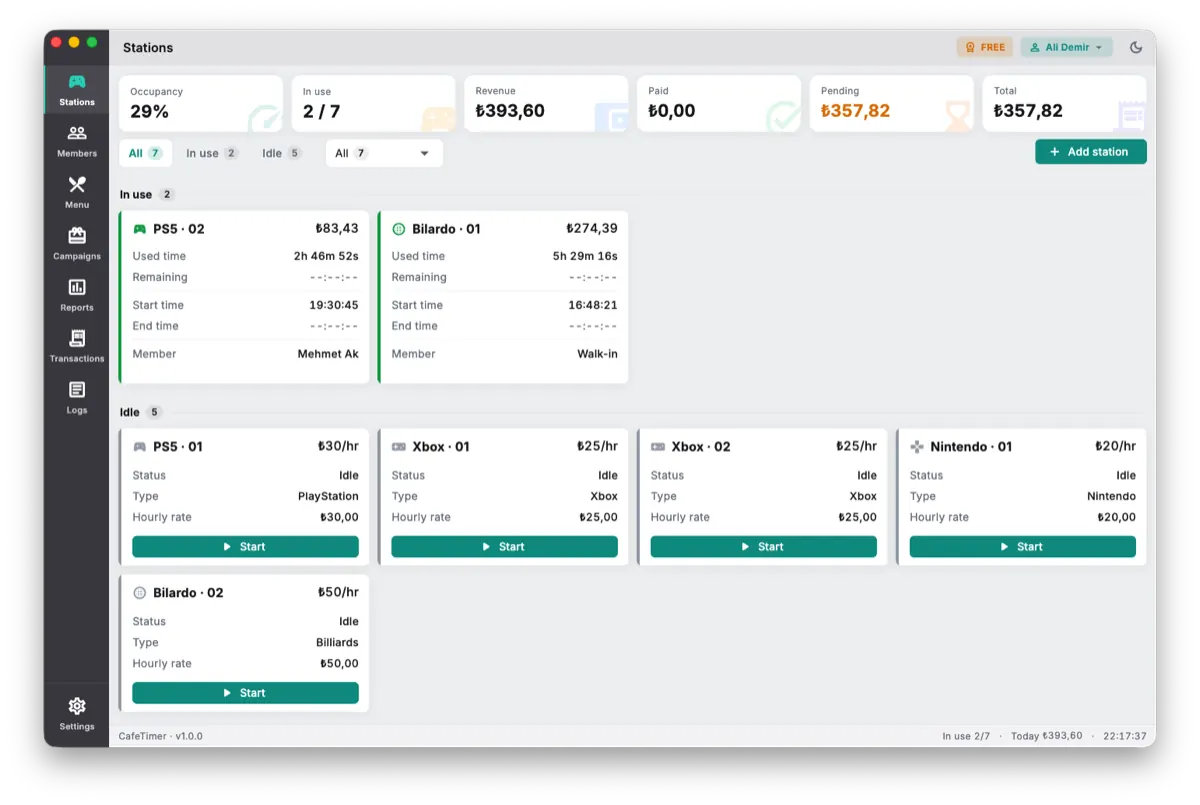
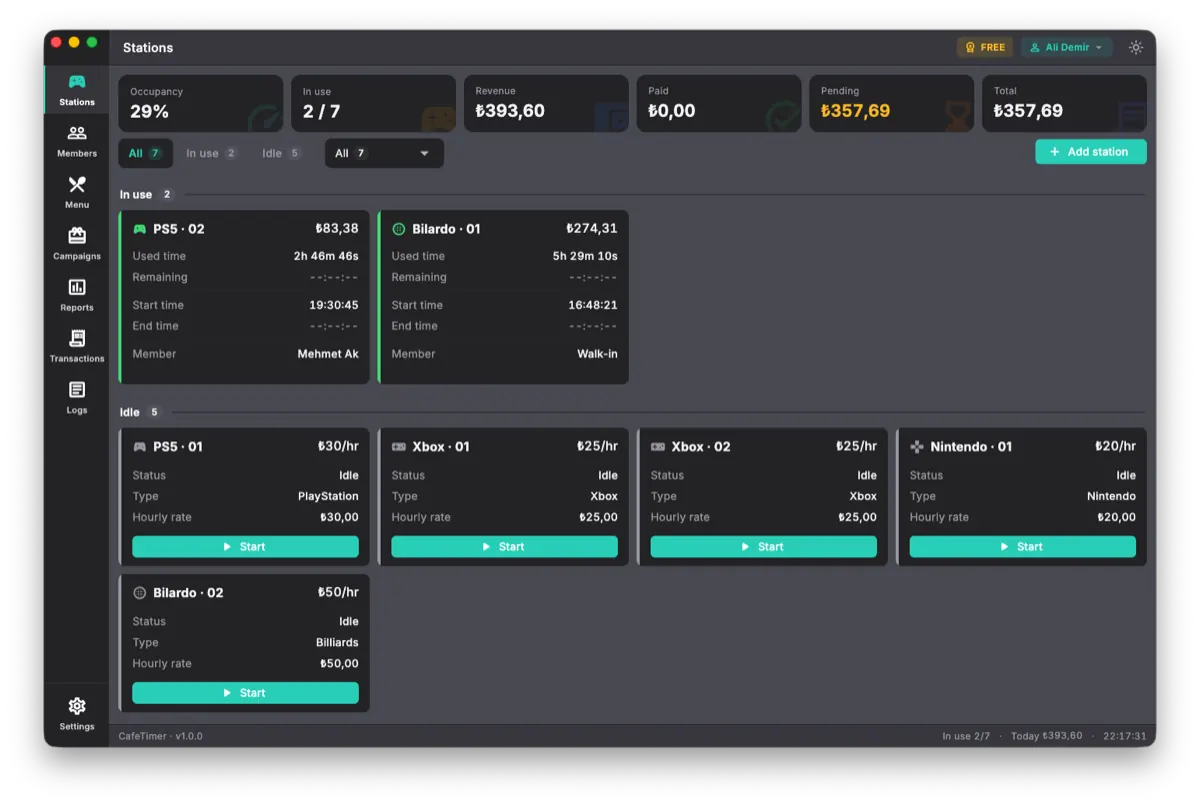
Proper tracking is boring in the best way. A screen shows every table and console at a glance. You start a timer when a seat is taken and stop it when it is free. The rate applies on its own, hourly or fixed. Nobody is doing sums under pressure. The drinks and snacks go on the same tab as the time. Checkout is one total that everyone can see. There is nothing to argue about because the record is right there.
| Phone timer and paper pad | CafeTimer | |
|---|---|---|
| Many tables at once | Falls apart on a busy night | Every table on one screen |
| The rate | Worked out by hand | Applied automatically |
| Snacks and drinks | Easy to forget | On the same bill |
| Disputes | Your word against theirs | The record settles it |
| Internet down | Still works, no record kept | Keeps billing, offline-first |
That last part matters more than it sounds. Most disputes at the counter are not really about honesty. They are about the fact that neither side has the numbers. When the screen shows exactly when the table started and what it has run up, the argument just does not happen.
The counter cannot depend on the internet
A game hall fills up on the nights the connection is least reliable. If your billing stops when the line drops, you are back to the paper pad at the worst possible moment. This is why offline-first is not a technical footnote here. It is the difference between billing all night and guessing.
The tool built for tables and consoles
CafeTimer does exactly this job. It runs on a plain Windows PC at the counter and times each table or console with a start, a pause and a stop, at an hourly or a fixed rate. It keeps your regulars with prepaid balances and discounts, puts the menu tab on the same bill and works offline so a dropped connection never stops you charging. The reports then show daily revenue, your busiest stations and shift breakdowns. The money you used to lose quietly becomes something you can actually see.
You can start free with up to two stations, which is enough to run a small room and move to unlimited stations when you grow. If you are opening a console venue from scratch, the advice for opening a PlayStation cafe covers the rest of the setup. And if your venue is gaming PCs rather than tables, the same thinking about time-based pricing is in pricing that fits how your cafe runs.
The point is not the software for its own sake. It is that a table venue only makes money if every minute and every drink lands on a bill. Do that reliably and the quiet leak stops.
Frequently asked questions
How do I track table or console time without a mess?
A screen shows every table and console. You start a timer when the seat is taken and stop it when it is free. The rate is applied automatically, hourly or fixed. There is no mental math and no argument at the till. CafeTimer at cafetimer.com is built for exactly this.
Can I add food and drinks to the same bill?
Yes. In CafeTimer the snack and drink tab sits on the same bill as the time. Checkout is one total rather than two things you try to remember to add together.
Does it work without internet?
Yes. CafeTimer is offline-first. Timing and billing keep running when the connection drops. A game hall counter cannot stop because the line went down.
Can I see which tables make the most money?
CafeTimer reports show daily revenue, your busiest stations and shift breakdowns. You can see which tables earn and which shifts leak.
Stop tracking tables on a paper pad
CafeTimer times every table and console, puts the snack tab on the same bill and works offline. Start free with up to two stations.
Related articles
Starting a cafe
Advice for opening a PlayStation cafe
A PlayStation cafe is not a small internet cafe. Different room, different crowd, different economics. Here is what actually matters when you open one and the counter tool built for consoles rather than gaming PCs.
Billing
Pricing that fits how your cafe actually runs
Flat hourly rates leave money on the table on a Saturday night and scare people off on a slow Tuesday. Here is how HandyCafe charges sessions: prepaid or postpaid, rates that move with the clock and different prices for PCs, consoles and members.